Friday, 16 June 2023

The May White - Hadden trove continues...

I previously posted some materials relating to May White and James Hadden 

https://zambiabones.blogspot.com/2013/01/a-find-in-drawer-hadden-white-johnstone.html

and some more have turned up!

We have found another few newspaper clippings, one which we can see is from the Livingstone Mail, also three greetings cards, another letter and an old large format black and white negative.

A Christmas card from May shows that she is working at East Leeds War Hospital, Harehills Road, Leeds, in Christmas 1918. Another is from H. Dawson of Queen Street, Thorne, sent in 1909. 

There is also a Chrstmas card from Mrs Cupper, mother of Lieut. E.C. Cupper O.F. Camp, Rhill, Wales, in 1917 to 'Sister White'. Another says 'To Sister May White, Bless you, Nayler' from 1918.

I was pleased to be able to do a decent scan of the photo negative, though its large format meant that I lost the front and back end of the car. It is presumably of May White herself, but I can't be sure.

It looks like it is taken in Africa, judging by the long grass, and presumably dates to about 1930.

The letter seems to be from James Hadden's grandfather,  from the letter head also called James (A.) Hadden, of 25 Union Terrace, Aberdeen, and is dated April 1935. Apparently they are writing to each other every week and James junior is at school, as he is told 'you must be a grand scholar now'.  'Wouldn't it be grand to romp about together again as we did when you were staying at 429 Clifton Road.' Grandfather signs off with love to the boy's parents, and lots of kisses.

This first clipping says that it relates to the sale of a property (in Thorne) of my great grandfather May Parkinson White and then has the date 1919 and also the name Hugh Hutchinson.

Then we have a clipping mentioning Mr Charles Strachan Hadden, M.A. LL.B, solicitor of Lusaka and Broken Hill, son of Mr. and Mrs J. A. Hadden of Aberdeen, Scotland, was quietly married at Broken Hill to Miss May Parkinson, only daughter of the late Mr. and Mrs James White of Thorne, near Doncaster, Yorkshire. The wedding was solemnised by the Rev. Frank Mussell at the Wesleyan Church. Mr B. W Stagg-Macey acted as best man, the bridesmaid being Miss L. Woolley, a colleage of the bride at the Broken Hill Government Hospital, where both are nursing sisters.
Finally a note from the Livingstone Mail that Mrs C.S. Hadden has returned to Lusaka from holiday, in 1931.


I'd be happy to reunite these materials with a family member.

Thursday, 6 January 2022

Garenganze or Seven Years' Pioneer Mission Work (Frederick Arnot)

This book concerns the Scottish missionary Arnot's (1858-1915) travels between and time in the region known as Garenganze between 1881 and 1888. The account was compiled by Henry Groves (of Kendal) and J.L. Maclean MD (of Bath) after Arnot had spent seven years in Africa, and is based on his letters and diaries. As such it does have more of the feel of reading a diary than a full reflection of the trip, but there is plenty of detail about his time at Lealui (Barotseland) and Garenganze, which we are told is known as Katanga by people on the east African coast, although elsewhere it is suggested that Katanga is further south towards the present day copperbelt in Zambia. In Garenganze Arnot is opening up a new area to Christian influence, though he travels through areas that Livingstone and others have reached.

There are some very nice illustrations, some based on photographs, which clearly represent individuals rather than 'types' of people as are seen in some books, but the people are not always identified clearly.

Typically, for a missionary account, there is a deal of reflection on the purpose of the mission, and prayer for success in bringing the word of God to places it has not yet reached, sprinkled with Biblical references that reinforce the purpose of the mission. There are also the usual encounters with lions, leopards and hyenas, and occasional disasters such as supplies being stolen and illness, or lack of water. Many children are snatched by lions and hyenas in villages.

There is also a detailed map produced by the Royal Geographical Society with a simpler inset, included here. I never cease to be amazed at the distances covered by missionaries in reaching the interior. Here the African trip begins in Natal after disembarking the Dublin Castle. 

Traveling through South Africa Arnot anticipates the coming Boer war - "the colony is getting into a disturbed state", although in 1888 the authors believe that war with the Transvaal has been avoided.

Of the Boers he says "they gave me their best accommodation; but my being a Scotchman was doubtless a recommendation, as they somehow believe [we] share their theological views".

He continues to Pochefstroom en route to Shoshong (Botswana), a route he claims is safer than traveling from Glasgow to London (were it not for skirting the Transvaal). At Shoshong he hopes to learn Sechuana, to help with understanding languages further into the interior. Selous accompanies him some of the way and tells him about the Batoka. The Jesuits had traveled to the Batoka area and were perhaps poisoned. They are giving up their quest there in favour of Barotseland.

Kama (Khama) he describes as a noble chief, and Shoshong as an exemplary settlement. Khama has forbidden the trade of liquor in his country, which he clearly approves of. "One would see more vice and open immorality on a Saturday night in the High Street, Glasgow, than would be seen here in twelve months."  Nevertheless he notes cruel practices such as putting to death deformed children and twins, or if any "suspicious omen occur [at the birth] such as the call of certain animals, the child is murdered [with] boiling water down the child's throat.... They also cast out old people" to the 'wolves'. These and similar superstitions and practices are noted throughout the journey, including the use of enchantments and belief in witchcraft, which to some extent carries on to this day in various parts.

Also interesting is that the Bechuana people had a story of their descending from Loa, who made all the animals and sent them out of his house two by two, which Arnot likens to the story of Noah.

Next we proceed to the Batoka area and the trading post of Panda-ma-Tenga established by Westbeech in Zimbabwe.

At Lealui, among the Barotse people, there are accounts of almost daily witch trials involving boiling water poured over hands. "If after twenty-four hours the skin came off the victims were to be burned alive".  Likewise captives are treated badly: "Among the Mashukulumbe the women and children turn out to applaud their brave warriors, who, I am told, string up by the neck to tall trees the little children they have taken captive, a spectacle which gives entertainment to the whole countryside."  These are just examples of practices that appear to be commonplace.  From time to time Arnot administers to victims or people who are ill. He also preaches to the Barotse and has conversations with Liwanika.

Everywhere the travelers go they must make their way by trading goods they are carrying such as cloth, often also through hunting and trading meat for grain. Failing to pay tribute to a local chief can lead to later troubles.

After traveling to the west coast with Senhor Porto he returns to travel further east and north into Garenganze, west of the great lakes of Northern Zambia and the Luapula River.  This forms the central part of the book.

In Garenganze, or Sanga, as it is also known locally, Arnot writes "how far ... ought we to go in such a country as this in pushing school-work; i.e. teaching to read and write etc. It sems to be a sure way of securing in the future an increase in church membership but of the sort that are brought up to it by the cold process of education whose spiritual condition is generally very questionable..."

Msidi is the current ruler, and traders arrive from as far as the east coast and west coast to supply goods. Copper, salt, ivory and slaves are the main articles of commerce, which are exchanged for guns and powder, cloth and beads. Msidi has a collection of treasures he enjoys displaying from time to time, including musical boxes, tinned meat, concertinas, opera glasses, scientific equipment, watches, jewelry, and uniforms.

Amongst these people it is notable that twins are not killed.

There are many accounts of tribes raiding other tribes for slaves, and of their ill treatment, with babies frequently being killed as not worth the trouble of capturing. "War is ... carried on for the sake of making captives". Once a year tribes expect to send slaves to the east coast with Arab slave traders, although they are also received by Ovimbundu traders from Bihe. See for example the 'taming stick' illustration.  Arab slave parties are also regularly seen attacking villages with rifles, while the villagers only have spears to defend themselves.  "Children able to walk are perhaps worth a little, but infants are ... generally cast out to the hyenas or thrown into the rivers."
 
Rounding off the book are some extracts of letters and accounts of Arnot's "fellow labourers" including Mr Swan of Sunderland and P. Scott from Liverpool, who are (probably) in the above illustration. With the aid of American missionaries they reach Bailundu.
 
Another point I found of interest was that with towns often named after the chief who resides there, their location is likely to move, or the town will change name, or both. So it is said that previous travelers that do not agree with locations of towns may be correct, with the town having moved.

Names

Many of the mentions are brief, including some interesting accounts of maneouvers amongst tribal chiefs and their sons and heirs. The index includes names of chiefs, rivers, and tribes, and there are some other names not in the index, a few of which I have included here.

Bagster, Mr W. W. (late)
Beaumont, A. (Maritzburg)
Blockley, Mr (late)

Chitompa (wife of Msidi)
Cinyama (Arnot's party, Kapoko)
Coillard, M. (missionary)
Coimbra, S.

Ekwikwi, King 

Faulknor, Mr W.L.
Fay, Mr and Mrs

Giraud, M. (excerpt from his book 'Travels in Bangweolo district')

Hepburn, Mr (Shosong) 

Kama (Khama, Christian chief Shoshong)
Kamane (Shosong)
Kasoma (and death of his wife)
Kasule (hand amputated)

Leask, Mr & Mrs (Klerksdorp)
Liwanika (Lealui)

Mababi (Kama's chief hunter)
Mackenzie, Mr (Shoshong)
Moemba (chief)
Moffat, Dr (Revd)
Msidi (chief, Garenganze)

Nana Kandundu (female chief)

Ramosi (Shoshong Christian)
Russel, Mr (preaching in Durban)

Scott, Mr P. (Liverpool)
Sekhome (Shosong)
Silika (minor chief)
Selous (Klerksdorp)
Setobi (Arnot's servant)
Swan, Mr C.A.

Wankie (Hwange, chief)
Webb, Mr (Potchefstroom, Wesleyan missionary)
Westbeech (Panda ma tenga, late)

Thursday, 5 November 2020

Resignation, Zambian style

This little letter has been doing the rounds. I don't know who originally shared it, but it is good enough to share again.


Dear Sir, Re Letter of resignation

Bye Bye Sir.

Yours faithfully...

That's what I call a letter of resignation 😀 Zambian style.

Happy independence day everybody!


Friday, 29 May 2020

A Treasure of Darkness (Mabel Shaw)

Subtitled 'An idyll of African life', this is another fine and often poetic book by Mabel Shaw, headmistress of the Livingstone Memorial Shaw at Mbereshi in Northern Zambia.  This one is intended for children, published in 1936 and told in the style of a story, but relating true events.

Notice the words Bashilikale ba mfumu around the logo on the dustcover, Bemba for 'the children of the chief'. (See my previous postings on the school for an explanation.)

Photos in the book were taken by 'Ma Sabin', who some googling suggests must be Margaret Sabin.  ('Ma' and 'Ba' are used as honorifics for seniors in this book'.)

Although many children from the school and some of the male staff are mentioned, the story mostly concerns Mary Livingstone, who was adopted by the school as a baby in about 1928, based on Mary being 8 in 1936, when the account ends.

Glaxo!
We begin with the story of Joseph and Mary travelling to Bethlehem, as a parallel of sorts with the story of Shambuluma and his wife Mwansa who have been travelling from the mines in the south (though we are not told where exactly). They had been travelling 10 days already on foot and still had 6 or more to go. Mwansa was carrying a sewing machine, a bowl and cloth, while Shambuluma had a spear to protect them and not much else it seems.  Mwansa is pregnant, and exhausted, and dies shortly after giving birth to their baby girl, saying only to take the baby to their village.  Shambuluma buries Mwansa nearby, and carries on with the baby, leaving the sewing machine behind. He considers leaving the baby behind as a lost cause, particularly as he meets people in villages on the way who mock him and tell him the child will never live.  The baby's head is misshapen from being carried on one side for so long. He feeds the child with fruit juice and water, with some watery porridge, but she is getting weaker all the time.
Greeting Bole-Bole
After some days of travelling like this Shambuluma meets a man who tells him to take the child to the people 'of the way of God' at Mbereshi, as they will have milk and he decides to do this rather than to his own village of Kakonde (in the Congo?)  He meets Mapoma from Mbereshi and Ana who call Mabel Shaw ('Mama') and the child is taken in.  The children tell Shaw that she has to keep the baby, and Shambuluma says he will work in the village while they look after it.  However, the baby does not thrive on the powdered milk they have and their cows are nearly dry.

Shaw wonders if the child will do better with a product she has seen advertised on a bus in London, which 'builds bonnie babies', Glaxo, but they have none. Then Solo is dispatched to Elizabethville by bicycle, a 6 day round-trip, and there is a tense wait for him to return. Finally he is seen returning on the 6th day, with 6 tins of Glaxo.
Mary holding Ba Honor's baby

The baby gets stronger and is eventually named Mary, after the mother of Jesus. Shambuluma returns to his village, now having the name Shi-Mary (father of mary). At 10 months, when Mary is baptised the name Livingstone is added, after David Livingstone.

Mary's grandmother comes on foot to visit from 130 miles away, saying only 'you have given her life', and 'my daughter's little baby' before returning to her village. Shambuluma also visits again, bringing gifts of food and news of a half sister to Mary called Dinah, at Kambole. The grandmother dies at this time.

There is a big scare when Mary falls 16 feet from a verandah, but miraculously she is found unharmed.

The rest of the book tells us about Mary's childhood in some detail, including how fond she was of little animals (especially frogs) and her favourite phrases. She seems to have been a lovely little girl and was a favourite with the older children, as we can imagine. 

Mary holding 'Bunny'
We hear many other tales of school life, the subjects the girls are studying and their chores around the school, also about Mary's friends as well as the older children at the school, in their yellow uniforms.

The children say that Mary must only be taught good things, and they must set a good example for her.

As in the other books often only first names are given, and older people are often not named in full, but here is a further list of names. If you look at the three postings I've done on Mbereshi you can also piece together some more of the detail of who is who and get some idea of ages in some cases by comparison with Mary.

We hear that Nellie Lombe, Ana and Betty went to Bulawayo for 2 years teacher training.


Names

Ba Agnes - nurse
Ba Chali - teacher
Ba Honor - nurse, 5 children
Ba Jennifer
Ba Leah Kabanda (headmistress)
Ba Mary Duncan
Ba Mapoma
Ba Rosalia
Ba Solo
Ba William (carpenter)
Bole-Bole
Ma Bishop
Mama Doctor
Ma Sabin
Mama Gorton

Annette
Betty

Charity (twin of Felicity)
Chanda
Chewe, Mercy (5)
Chililalila
Chiluba
Chola
Chungu (the cook, who was one of the first girls at the school)
Clarissa (dau of Ba Chali)
Daisy (5)
Dinah (Mary's sister, Kambole)

Eshnati
Fanny
Felicity (twin of Charity)

George, Bonaventure David Chileshe Washington 'Bunny' (Roman Catholic father clerk in town; mother died at birth) came from 400 miles away in Congo

Huldah (child of older girl at school)

John - son of Ba Honor

Jairus
Jeanne - 'little white Jeanne  at Kawambwa who came to see 'Murry' as she called Mary
Jennifer
Jess
Joy
Kabanda
Kabula, Hilda
Kapanga
Kasampa
Kathleen
Lombe, Nellie
Ludiya
Lupupa
Luse

Maggie
Margaret
Miriam
Monica
Mpongwe
Mukamba, Mary (big)
Mulenga, Rachel (teacher)
Mwaba
Mwila, Ana

Ponde
Pule, Ada

Ruthie

Sumaili
Susan - teacher of baby class

Tessie, Margaraet (head girl)

Monday, 25 May 2020

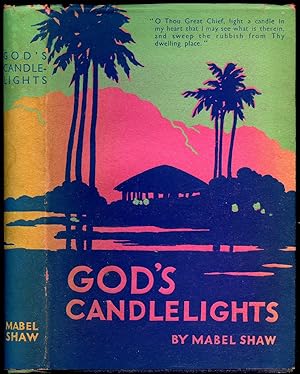
God's candelights, Mabel Shaw


https://pictures.abebooks.com/LITTLESTOURBOOKS/md/md15499450702.jpg

'God's Candlelights, an educational venture in Northern Rhodesia'  is another book about the first Girls' School in Zambia, at Mbereshi (see my previous post here on Children of the Chief). This one is based on Mabel Shaw's letters dating from 1916 to 1933 during her time heading the school that (in her own words)

'tells of an attempt to conserve all that is true and good in the old life and to build upon it; and so to present the Christian faith to the community and to the individual that they see it not as the white man's religion... but through the familiar ways of their own thought and belief.'

This follows closely the idea expressed at the Le Zoute 1926 missionary conference that 'everything that is good in the African's heritage should be conserved, enriched and enobled by contact with the spirit of Christ'.

The Journal of the Royal African Society said in 1934 (Vol 33 No. 132) 'During her nineteen years of missionary work ... Miss Shaw has made a name for herself and for the school she has built up in Mbereshi. God's candelights is a record full of meekness, devotion and thanksgiving, of the patient sympathy which has led to that success - in which failures and difficulties are spoken with candour and triumphs with humility. If there was an Mbereshi in every African village, there would be no need, from Africa's point of view, for the pomp, the circumstance, and the heavy hand of colonial government.'

This is a fair summary of the book.  Although initially the narrative appears rather rose-coloured, there is also later admittance of where things have gone wrong and discussion of problems in the village and failings of her own and the children's.


There is a long waiting-list to join the school. In some cases parents return for years as they move up the waiting list, with only 6-8 children being admitted a year. For some this happens until their child is too old to join.

There is mention of some local customs, including the practice of killing a chinkula baby, one who is born with their top teeth appearing first, which is a bad omen.  One such child is saved from this practice.

Other customs we hear about include how fire is taken from one village to another, and of how fires are extinguished when somebody dies, a new fire is lit and then all fires are started from this new fire. Also we are told of the sprinkling of flour on the ground for various reasons, and spitting out the first mouthful of water.  A stick is placed in the ground for protection. A game the children like to play is tying a bird on a piece of string and whizzing it around until it dies (at least, before Mabel!)

The LMS were also against polygamy, beer drinking and 'certain inheritance rites', which newly baptised Christians agreed to refrain from. The last presumably refers to inheritance by a brother of a spouse on the husband's death. But Shaw also prefers to stand back from interfering in girls' coming of age rites until invited in by the older women, who it appears later abandon their traditions in this respect. 

We are told that Sanda, or insulting somebody's appearance, is taken as a serious offence. On one occasion a girl is made to wear large paper ears for suggesting another girl has large ears. The Bemba proverb is 'she who sandas spoils her own looks' but they also say 'the mother does not throw the bad child away'.  The last rain is called kunta nsoka, which translates as 'the shaking off of the seeds'.

When Mabel first arrives the children are usually married at 14, but she extends this to 18 during her time.  There is a maternity and children's hospital alongside the school buildings and dormitories. Infant mortality is high - about 45% of first babies die.

Northern Rhodesia, 1927
Other places mentioned are: Kasembe (Kazembe's village, 10km south), Mpolokoso (Mporokoso), Kawambwa, Mbala, N'kana (mine),  and Elizabethville (now Lubumbashi, DRC).

Mbereshi is close to the Luapula River, on the western border of Zambia, and we hear of people crossing the river.

As the map included here shows (from Funk and Wagnalls Atlas of the World, New York, 1927) Lusaka doesn't really register at this time, and Elizabethville is the largest town nearby. We also hear about people coming from Lake Mweru (here Moero), Lake Tanganyika, and a visit to Kalambo Falls. You can also see Fort Roseberry here (Mansa). See also the map here.

'Is it ready yet?' Hilda Katongo and Mary Livingstone
One of the girls makes a trip to Elizabethville to experience town life, and everybody at the school wants to learn about this exciting trip. Mbereshi itself is quite wild. Post is a treat and when Christmas bags arrive only carrying Bibles from the British and Foreign Bible Society, there is great disappointment.

Shaw hears an interesting legend from an older tribesman about the awe inspiring Kalambo Falls (which is more than twice the height of Victoria Falls). The man says that two chiefs were always fighting over who owned the gorge. Eventually 'the young wife' (the chief having many wives) with her first born on her back came one dawn and threw herself over, 'thus making it ours forever'.

There is quite a lot about Chief Kasembe and how his power has dwindled during the time of the school.  It is told that the previous Kasembe punished various people by mutilation, including removal of ears, nose, fingers, tongue and lips. Victims included Katayi and Mwaba.

A particularly good tale is of how Shaw was telling some of the young children the parable of the Good Shepherd. The children are paying rapt attention. When she is finished she asks them why the shepherd was looking for the lost sheep. One girl immediately pipes up Munani! (relish!) in other words, because he wanted to eat the sheep.

Names

Sometimes it is unclear whether a person is a teacher or student, particularly since children who had passed Standard II were given teaching duties themselves during their last year. Subjects taught included geography, biology, hygeine and arithmetic (counting and money).

The abbreviated names include Dr M, Nurse R (Rebecca? A Scots midwife perhaps) , Miss B, Miss S and Miss W.

The children are given English names alongside their Bemba names.  There are some unusual names recorded, not given by the school: Trotters, Comic, Bunkum, Giotto and Giovanni.

David Livingstone is still fresh in the memory and gets a couple of mentions.

Men 

Andreya (evangelist)
Bole-Bole (trips with Shaw, day watchman)
Chakota, Nelson (evangelist)
Joshua  (evangelist)
Kakula, Paul - witchdoctor turned apostle
Kansenga (kapitao at Kawambwa store, uncle of Grace Katunansa)
Kasembe, Chief
Kasokolo, Henry (ministry training since 1927)
Mapoma, helps transport cycle during trips
Nshimba (Chief, Chilwa Island, L. Mweru, muslim)
Ntundu, John
Solo, seems to be a leader of others on trips

Girls and teachers

Mostly first names are given so some guessing is involved here.

Amelia (became teacher, fell pregnant unmarried)
Ana

Banachimumbwa
Bwalya,  Leya
Bunyan, Johnny (nickname of girl from L. Mweru who arrived as a 4 yr old) 

Chama, Phyllis (head girl)
Charity and Felicity (twins)
Chilima, Bessie (sister of evangelist brother, fell pregnant, daughter Ruth?, later married)
Chilufya, Mary

Chipampa - joined school aged 4, punished for sanda
Chipepa, Alice
Chipili

Chishimba, Lise who married 'Timorthy Crocodile'
Chitoshi (girl, died)
Chomba (her house)
Chongo, Enesi (married at 15, went to Congo)
Christina (teacher)
Christine, daughter of chief's man
Chulunoma (watchman, old)
Chungu - Kasembe offered to marry her, visited Elizabethville, later deacon of church, first marriage failed, had daughter Betty
Constance, house-mother

Duncan, Mary
Ethel
Gracie
Hilda (and her dimples), perhaps Catholic, mother wears a St Christopher's - is it a charm? The chlidren debate.

Kabanda, Fane
Kabungo, Katie (daughter of teacher in American mission in Congo)
Kabwe, Ethel * (teacher)
Kabwe, Dinah (*sisters)

Kalulu (little girl, presumably nickname)
Kaoma, Rebecca (house mother)
Kapaya, Cicely (baby, mother died)

Katongo, Hilda
Kisha, Luse (teacher)
Kwenda, Mutemwa (old)
Livingstone, Mary (there is apparently another book telling her story)
Lumanya, Josephine
Lupambo, (polygamist man)
Lupapa
Lushiya

Malita (house-mother)
Mambepa (beaten by others when she became an 'elder', for her insolence when younger)
Margaret
Masala (has a child called Leya)
Masapanshi
Margery (teacher)
Mfuta, Mary
Milika (teacher, went to Elizabethville, later Ndola where she was a cook to a protestant missionary, married Mbereshi man)
Mulenga, Maggie
Mulenga, Rachel (mother was widow of evangelist, died, children Rachel and Tabita left to Mabel Shaw; marriage problems described)
Mumbi, Emily
Mpuya
Mubanga, Isobel (house mother)
Mubanga, Jessie
Mubanga, Nakulu (last words recorded)
Mupelwa (buried baby)

Mulengo, Lise - daughter of Lupambo from Wankie (S.Rhodesia) married about 1928, husband 'Light' died about 1932, remarried his brother Sambini by inheritance, had a child by each father. She was lame, saved a chinkula baby from destruction.

Musonda, Mariya (chinkula baby saved by Lise Mulengo), daughter Priscilla died aged 1.
Mutiyampa, Fane (has child called Hilda)
Mwambwa, Mary
Mwansa
Mwenya (oldest girl? school matron? Girls' teacher at puberty, chimbusa; she was rescued from an Arab slave caravan)

Namusonda
Nellie (baby boy burial)

Ntinda, Rebecca (matron and midwife?)
Philemon, Mercy

Rachel (teacher)
Ruth (golden-haired, 'half-caste' girl)

Safila and Susan (girls who were good at weaving)
Sela
Shi-Chongo (man of the village)

Zipa

Deaths remembered on All Saints' Day

Chipola, Agnes
Chitoshi, Agnes
Kapaya
Kabesi
Malita
Mwamba, Mary and her little son Michael

Saturday, 2 November 2019

Zambia: I changed my mind (Michael Wright)

I'd seen this book a few times on eBay and formed a first impression of what it might be like. I was ready to be annoyed, and almost immediately was, but in the end the author makes some good points.

If we are any doubt as to the argument, the inset of Chairman Mao should help to set the scene. The author is concerned about the increasing influence of China in Africa, but actually the book is more about the failure of the political system and the steady erosion of democratic ideas as the one-party system takes hold in the late 1960s. The book leaves us in no doubt that the author considers Africa unready for democracy, that the Zambian constitution is a mockery of the real thing and that English policy towards central Africa is a failure.

Along the way we hear much about Wright's bewilderment with the way things are run and failures to tackle issues as they arise. Sometimes this is justified, other times I am reminded of a visitor who spent time telling everyone that they found an ant in their water, as if this was something to be remarked at.

Michael Wright came to Zambia in 1967 and spent three years lecturing in Economics and Government at Evelyn Hone College in Lusaka, a post advertised through the Ministry of Overseas Development.  He 'changed his mind' because he came from a liberal background, but after his experiences we wonder if he remained a liberal. In fact, he suggests that 'this catastrophe' should not be repeated south of the Zambezi.

You will not be surprised to hear that the book contains many examples of facilities that are not repaired and systems that are not functioning, and yet after three years in the country, and three years since independence, I feel it was a bit premature to trot these examples out as proof of the country's failures.  At the same time, we can see now the continuing failure to tackle major infrastructure issues, in particular water and electricity supply, with areas such as Makeni lately suffering daily power cuts spanning a half day or more, usually during working hours. Imagine the impact on your ability to pump water from your borehole, to flush toilets, to wash clothes, or to keep food in a freezer.  We are getting to the point where everyone will require their own generator.

We hear that on his arrival his disillusionment is still to come, and he hopes for a bright future, as suggested by the new currency names of kwacha (dawn) and ngwee (brightness is coming).

Wright spends a fair amount of time talking about Kaunda's philosophy (said to be developed through correspondence with Colin Morris) of humanism and how nobody can figure out quite what it means, although he asserts that the idea of the 'common man' is taken as meaning that a living is justified by one's position in life, rather than effort.  As the idea of humanism is put into practice it becomes about decent housing, a good diet and charitable effort alongside less helpful ideas such as Simon Kapwepwe's suggestion that English should not be taught in schools.  I remember the backlash against the mini-skirt in the press, as improper and not worthy of Zambian culture. I see this as Zambia finding its feet, deciding what it meant to be Zambian.

Of course, Kaunda was also trying to unite many tribal groups. However, later these worthy ideas are tarnished as it appears that UNIP membership is often a pre-requisite for employment.

There is mention of road renaming, and an attempt to name streets after two Africans who had been hanged for killing a European lady in her car (see elsewhere on this blog for more on this story). But this was rightly quashed, and we should not be surprised, as he is not, that we no longer want a Cecil Rhodes Drive.  On the other hand we have a declaration that Eveyln Hone College was built by the Zambian Government, when it was built by the British South Africa Company, as an example of a revisionist approach.

Religion

I was intrigued by mention of the Anglican Cathedral, because I think my father would have been there at the time.  Wright suggests that the church is regarded by the president as a natural instrument of his policies and that he holds sway over the clergy. By way of evidence that the Anglican church is losing its way he cites splitting from the church in Rhodesia, Africanisation, and relaxation of regulations covering marriage. He says 'the church in Lusaka contained some rather odd people' and tells us about a sermon in which the priest (allegedly) said that drug taking was quite acceptable, after all 'look how many people take aspirin or sleeping pills'. But surely this is wilful misinterpretation? Then he suggests that the priest has said the Ten Commandments no longer really apply. Hmm...

After the service, Wright talks to the priest, who defends his position and also military opposition to Rhodesia. Hypothetically speaking, Wright suggests an example of the Epworth mission outside Salisbury, should they be bombed? Regrettably, this might be necessary, the priest is claimed to have said.

I don't think I see my father in the first quote, though I can imagine him taking a strong line against Rhodesia, as I remember him going off to do broadcasts on Radio Freedom, which started with the sound of automatic gunfire, and songs of Umkhonto we Sizwe. I am left wondering if it was him.

Wright claims that the Watch Tower movement talked of the 'miraculous removal of whites and the discomfiture of the missionaries', not something I've heard before.

Living in Zambia

There's quite a nice chapter about living in Lusaka, touching on places like Munda Wanga and the drive-in cinema up the road, suggesting how nice it could be, but there is always an undercurrent of worry and trouble. For example there is the story of the white girl (unnamed) who, following a quarrel, was beaten so badly by daughters of a minister at her school (somewhere near Woodlands) that she was hospitalised. The minister's daughters were not disciplined afterwards, it seems. There are many such stories, so that we are left with the impression that life is cheap.

In the end I recognise many of the things that Wright says as true, but it still seems a harsh judgement for somebody who spent just three years in the country, however much truth there is in it.  I wonder what happened to Wright afterwards.

The book contains an appendix of references*, mostly from local newspapers, backing up the author's statements.

Most of the names in the book are government officials. I've tried to indicate some of them below:

Abrahams, Dr *
Banda, Dingiswayo? (Copperbelt and 'Zambians first' speech)
Banda, Hyden (Western province Minister)
Bennet, Mr (refugee in Lusaka prison) *
Bing, Mr G., Nkrumah's former legal advisor *
Boyd, R.N. (auditor)
Burke (Ndola Magistrate)
Chiabi, Dickson (loans board)
Chimba (minister)
Chyawa, Chief
Dake, Mawuse Dr (UNZA) *
Doyle *
Evans, Ivor (judge)
Fabian Society 
Ferrier, Mrs * relating to death of OG Wilkinson
Frobisher, Mr (Evelyn Hone)
Gascoyne, Mr *
Grieve, Mr
Holloway, John
Hyreck, Buhuslav (Czech press)
Japau, John (Minister)
Jennings, Mr (Tourism consultant)
Jones, Brynn (Australian librarian UNZA)
Kajuga, Mr (driving out evil spirits in Lusaka)
Kalengelesha, Michael
Kapwepwe, Simon
Kellock, Thomas (QC)
Lenshina, Alice (Lumpa church)
Macleod, Ian (British PM)
Mataka, Philemon (Bishop) *
Matanda, Mr (Kafue UNIP)
Mkandawire, Michael (TV announcer)
Molteno, Robert *
Morris, Colin
Mudenda, Elijah
Mumba, Eustace
Mumba, Laywell (DG)
Mwale, Matthew
Mwambulukutu, Mr. *
Nkama, Moto *
Nkandawire, Simon
Nkoloso (he of the space program)
Nkumbula, Harry
Ntambo, Jonathan (Choma governor)
Phiri, James (UNIP)
Ranger, T. O. * (African churches of Tanzania)
Rex, John (murdered)
Sell, Miss (Evelyn Hone)
Sharpy, Alex
Sidhom, Salih (Railways)
Skinner, James (UNIP)
Smith, Ian
Temple, Merfyn
Wheelan (Justice)
Wilkinson, Revd Oliver Green
Wina (information minister)
Zimba, Mary

Sunday, 29 September 2019

Lusaka Infants' School, June Kashita's book 'This was my Africa'

I was going to do a piece about June Kashita's book 'This was my Africa: Living with changes' (published in 2018), but as I read it on a Kindle I wasn't making notes as I went along.  Then I started making notes on another app, and lost them...

There was much of interest in it relating to early post-independence history, and many familiar names, as well as some nice old photos (which you can see quite well on a kindle, in colour, and enlarge quickly to zoom in on details, an unexpected bonus).  Of particular interest for this blog was the number of names relating to schools, since June was a teacher.  I thank June for reminding me of the name of my Grade 1 or perhaps Grade 2 teacher, Mrs Barbara Cook, at Lusaka Infants' School.

There is insight also for the outsider into the workings of the Convent School, and more names there too that I will try to add here some time.

 There's a memorable story about a visit to NEDCOZ (National Educational Distribution Company of Zambia) for teaching supplies. On one such trip they were buying blocks of paint packaged in sets of 6, but which were priced in tens, so they bought 10 packets to keep the arithmetic simple. However, rather than doing the maths of 10 x 6 = 6 x 10, the cashier insisted on unpacking all the packs of 6 and arranging them in piles of 10. Classic.

Anyway, without all the names in the book to hand, I am just going to dump some images in here that I've been thinking about for a while, particularly since we haven't gone long since the 50th anniversary of the moon landing, and I knew I had this sketch in my Grade 1 or 2 NEDCOZ exercise book.  Plus there are a few names and other mentions here that seemed worth pulling out while I am talking about my early school days. I do not know who all of these people are, but maybe they do.

I guess I was in 1 Blue, judging by the sticker on this book.
And can I just point out that I got two 'stars' - see the clover stamps? Thank you very much. My artwork hasn't changed much since then.  Sometimes we would get these rubber stamps on a nominated part of our body as well, usually the hand, but I have to say they didn't show up too well on darker skin.

It's funny how you can go from looking at snails on Monday to men walking on the moon on Tuesday.  It certainly helps to date things though: 21 July, 1969.

On Friday 29th May, 1970, I recorded that On Wednesday we had a fashion show at school, and that a group of boys called the Rising Stars (anyone remember them?) had played some music. Tickets were 20 ngwee for children and the school PTA made over K200 from the event.


On Friday 5th June 1970 I wrote "We must not fight in the playground. We must play nicely and not spoil other children's games. Last night I saw Tamsin and Mark and Yvonne and Susan and Jaish on televiosion. They were making dragons."  This must have been on a children's TV show. I remember characters called Dizzy Lizzy (a dancing cow) and another cow, I think. Perhaps the show was sponsored by the Zambian Dairy Board? I was on it too at some point, and danced with those cows.

I am sure that Mark is Mark Appleford, as I do remember him. Son of Dean Patrick Appleford, they lived at the Cathedral deanery while we were in Victory Road.

I also recorded us going off on a sponsored 10km walk in 1970, but I should do a separate post for that.

I'll end with a couple of photos from a Lusaka Infants' School evening event, under spotlights, imagine! I have no idea what we were doing, but I do remember walking around in circles on the stage, and that our 'costumes' were pieces of card stapled around us at the last minute. I think I was a solider? Who knows.

 I don't even know if I'm visible in these photos, but if you recognise yourself, I'll be interested to hear from you!

Lusaka Infants' later became Jacaranda Primary School.

Saturday, 6 April 2019

Scrolls magazine, Kabulonga Boys' School, 1977

I left Kabulonga Boys after Form II, in 1977, the year I paid the princely sum of 15 ngwee for this school magazine.

Back in 2009 I posted some pages on facebook (see some discussion on it at the Kabulonga Alumni page), but I hadn't included it here until now.

It sounds like this Vol 1, No. 1 was not followed by a No. 2, but kudos to the editorial board for making the effort all the same: Jophael Mbizure, Herrick Mpuku, Kennedy Mahupete, Peter Banda, Laiven Apuleni and Edwin Chirwa. Actually, they say that they had to raise the price to 15n (described as a 'melancholic situation'), so perhaps there was a previous issue?

Thanks were given to Barton's Cycles for their sponsorship.

There were also contributions from C. Mwanamcze (a poem), Robert Mbewe, David Katanya, Makuya Mbewe (Form IV D), M. Moyo, G. Ndhlovu, K. Sikombe (5A).

There are letters from Ignitius Kabwe (2S), George Zulu (1G) and Yunus Vally (4B).

H. Walia reports on the Debating Club and Squash Club. I'm not sure if I was in Walia's league at that age, though I spent many a lunchtime at the squash courts, leaving sweaty to go to afternoon classes. There are only 19 members, Walia says. Sounds pretty good to me! The school has no squash racquets.  The boys played the staff at the end of term I in 1977, and the boys were beaten.

The debating club has had two outings, one to UNZA and another to Southern Province. At UNZA Emmanuel Chifulifuli, Baldwin Nkumbula and Harvinder Walia spoke on "Africa cannot do without foreign aid".  It appears that we "universed the UNZA students very much." Not sure what that means!  Norman Sumbwe also took part in Southern Province, where they beat Kafue Secondary School and Canisius College in Monze.

Football: Morton Tembo leads the team against "terroristic" Copperbelt Champions Roan Antelope Secondary School in the Zambia Schools Floating Trophy.  Kabs had beaten Libala in the semi-finals. But no fear, because we have Jeffrey "Dribbler" Sakala and Stanley Chanda on our side. In defence also, Morton and Michael "Vandu" Mulenga will surely stop the terrorists.

The basketball team, led by Norman Sumbwe has beaten nearly all opposition. "If there is a game involving a trophy we hope the team [uses] Kasanda, Primi and Dingi to produce fireworks".

In volleyball, Shepherd Libebe and Mr. Filimonu are shaping up the teams. They have played at UNZA and beat all schools taking part, thanks also to Isaac K Kayula's efforts.

Patrick Unene and colleagues are "losing interest" in the boxing club because the new members are "boring". Come on new members...

We hear that the Red Cross Cadet Unit was started in 1973 and chaired by Gabriel Mtonga, later (1975) by Edward Soonga, with assistance from R. Mubamba. Now Herrick Mpuku and David Katanya are chairing it.

A letter asks: What happened to the General Knowledge Club? Since Mr Gupta left there has been no news of it. (Ediwn Chirwa suggests: why not start one yourself?)

There's some prose from Israel Phiri (4A)  and Brian Mhango (4A) provides a crossword puzzle on the back page. Clarkson Chisamu is memorialised by his friends. Edgar Chaponda and Paul "Jones Mandevu" Mwila are remembered as good 'contingent bosses' of the cadets, whereas current NCOs (Ba Nthepe) are rude to their lower ranked officers, shouting nyabwa and kwiyo at people. I am clueless, please fill me in....

The District Governer Edward Limande 'blasts' youths for having an inferiority complex, and stresses the importance of introducing UNIP branches in institutions such as ours. "Young people have lost the spirit of togetherness as compared to the actions of our forefathers. The nation as a whole has undergone acculturation due to influence of western culture. We even use forks and knives to eat nshima. Just imagine."  Limande also suggested that students should be inventing new machines rather than relying on imported machinery, and not aspire to be engineers, which was not well received by students who planned on studying engineering.  Also those foreign dances like Cikokosh (again, I have no idea what this is, but apparently 'water-gate'?)... not a good idea.  Students asked him why he was wearing a suit rather than skins, but the DG did not explain, or pass comment on suggested ill treatment at National Service camps.

Herrick and Laiven interview acting headmaster Mr Kampata. In my next school I wrote an English piece about how Mr Kampata tried to make us sing the national anthem three times, because we weren't putting enough energy into it, and on the third attempt one voice after another dropped out until just Mr Kampata's amplified voice was left singing from his podium in front of the quadrangle.

Mr Kampata had then been teaching for twelve years, and was previously at Namwala, Monze, Kalomo and Chipepo secondary schools.

Why, the interviewers asked, are the prefects wearing old ties? Are there no funds for new ones? It is true, the headmaster admits, the price of ties has gone up too much, we can't afford them anymore. Some of them are wearing different coloured ties, purple, maroon... which is the official tie?

The headmaster had recently also announced there would be no more free exercise books, due to lack of funds, something that apparently applied to most schools in Zambia.

Why not use the money from the production units, particularly metalwork, which made a lot of money selling 'triangles' (presumably the kind you were then required to carry in your car in case of breakdown) to buy exercise books? Wasn't that what the government wanted from production units like these?

The headmaster suggests this is not really the case, but some boarding schools could grow their own vegetables or raise chickens. The PU relies on money from the PTA and there is a loan to be repaid.

It also sounds like students are having non-school garments confiscated, when found wearing them on top of uniforms, while in school. In future, anyone claiming for non-school garments is "going to pay a fine of 10 ngwee to collect them".

Old diving board structure?
The swimming pool is mentioned as another example of something the government said they could not maintain anymore. Funds were raised by students and parents to keep it open. That year we held possibly the last swimming gala at Kaboys, organised by those of us who were swimmers at the time, without staff involvement, my mother says. But my diary, which has a detailed account of the day, says Mr Potts was involved and the whole school came. Swimmers included Patrick Mulenga and someone called Dale, and a diver Harry Secombe (well, that's what I wrote).

This post was initially prompted by contact from Edward Simukonda, who is trying to rennovate swimming pools. Thanks to Edward, we can see the state of the facilities now at Kabulonga Boys' and Girls' Schools.

I remember my woodwork teacher, Mr. Antoine, chuckling over the discussion of the swimming pool he had been a part of. "Drain it and leave it", he said, in disbelief. "Drain it and leave it". I suspect that that is what happened next.

When I were a lad, this was nowt but swimming pool
Another letter in Scrolls laments the state of the ceilings and general outlook of the school. I remember some very scary ceiling fans, which wobbled so much they could not have been safe to run, so we didn't, except to check that they still worked, and marvel that they remained attached to the ceilings.

"Is this becoming a fee-paying school?", another letter asks. What is the difference between paying K40 to the school compared to providing my own exercise books, paying K3 for fixtures and fittings, K1.50 for the swimming pool (per term) and buying my own uniforms?  Anyway, couldn't the woodwork unit repair lockers and the like? Ah, but you have to pay for timber, says Ed.

And where did that production unit money go, asks another student in 3L. What is the balance now? Sorry, we don't know says Ed.  But maybe the accountant Mr S.S. Malambo in room 27 could help with this.

Changing rooms?
All in all there is a surprising amount of history in these 18 mimeographed pages.

I also had a dig through my personal diaries from that time and remembered a few names: Fr Norris (R.E.), of course. I particularly recall that his first question to the class was "what country do you think I come from?" I reasoned as follows in my head: he sounds American, but if he was he wouldn't ask, so he must be Canadian. "Canada," I replied, confidently. "Who told you?" came the surprised reply.  He was a good fellow, and organised our basketball tournaments, with "3 to make 2" on the free-throws. We were not very good....

The Form IU team in 1976 was: Wilson Shankaya, me, William Chewe, Boswin Kandawe and Stevenson Ngwenya with substitutes: Amitava Chaterjee and Don Mainga.

Also in my diary other teachers: Mrs Chantilasikeram (? Science), Mrs Mukerjee, "Chief Kalaba" (can't recall his name, probably African Studies; that was his nickname after a long discussion of Chief Kalaba's area), Mr Nyirenda (Civics), Mr Koshy (later Civics, not a nice guy), Mr Nsamba (P.E.) and Miss Mumbwa (English).  I will probably have other names somewhere on exercise books.

I must especially mention Mr Mwilambwe (RIP), a Zairean who taught us French without speaking English.  We actually groaned when the class ended.

Most of these days I was hanging out with the squash court/swimmers gang, especially David Woakes, Patrick Armstrong and Dominic Goth (RIP). Dominic's sister Celia also sadly passed away a couple of years ago.

Also in my diary: Bhanu Nanduri, Bosco Britto, Justin Meyn, William Oglethorpe, Hitten and Dhimant (Patel? brothers), Hussein Mussarat, and others.

Friday, 4 January 2019

Index of Dutch Reformed Church Baptism Records for Lusaka 1915-1971

I've had a go at indexing the Reformed Church records for Zambia on FamilySearch, beginning here.

The citation for these records says that they are from the Dutch Reformed Church Archives, Potchefstroom. They are baptisms from 1915-1971, however, they are not only from Lusaka and it is not always clear where the baptism took place. Other places that are mentioned are Mufulira, Luanshya, Broken Hill, Krugersdorp, Livingstone, Kalomo, Bowwood, Chingola, Nkana, Zimba, Bulawayo, Chomo, Pioneers' Rest, and Tara. Some names seem to have come from registers in Rustenburg, in the North West province of South Africa.

I'm sure I've made many mistakes, and some transcriptions are just guesses, but this could give you the start you need to get into the register at the right place. If you have any corrections to my readings, let me know and I'll fix them, but I've tried to be true to what (I thought) I saw written down. (Earlier I did a rough trawl of names in these records, which I posted here.)

Image 21 in the FamilySearch records includes some duplicated records from the begining of the register as well as some baptisms that are not mentioned earlier, but also have no dates attached to them.

See the full list of names here!

https://zambiabones.blogspot.com/p/index-of-dutch-reformed-church-baptism.html

Monday, 3 December 2018

Requested Aylmer May Gravestones

Barend Jacobus Van Biljon  1897 - 1953

Anna Magdalena Van Biljon nee Bekker 1902 - 1961
These are stones I've been asked to post from the Aylmer May Cemetery names I posted earlier.

I hope you find what you're looking for!


Liga de Beer (1959), Sheila Shirley Leyer (1958 - 2000)
Van Lourens Johannes De Beer 1912 - 1946


Hendrik Burnadis Voss d. 16th Oct 1956 aged 38

Posting this because I can't read it.... R something
I am guessing that this Voss is the one in the one in the Reformed Church Records here, bottom right of this page.

Friday, 30 November 2018

The Search for Patrick Kerr Dixon's family

Inline image
The Times Newspaper obituary in 1955

This is just a quick post to mention an interesting contact received this week from the archive development officer for the Belfast Charitable Society linked to Clifton House, Belfast.

Clifton House recently uncovered a wonderful trove of over 180 letters dating from World War I, written by Lt Patrick Kerr Dixon, later Dr Dixon FRCSI (Fellow of the Royal College of Surgeons in Ireland).

Dixon spent time in the Belgian Congo with the Garenganze Evangelical Mission and later worked for many years in Zambia at Chibambo, Mbereshi, and Lusaka.

He was a friend of Charles Fisher and the book 'Nswana' records that Fisher hoped to travel up the Nile to Palestine with Patrick 'a surgeon from Dublin whose mission hospital at Chibambo was many miles further south [from Kalene Hill] on the Luapula River. They gave up these plans when Patrick was called suddenly to another hospital vacant on account of a serious scandal, and Charles also received disturbing news of his father's increasing ill-health'.  Monica and Charles visited Dixon a few days after they were married.

We are told that the population at Chibambo provided plenty of patients for the hospital where Dixon operated and that he was 'the first doctor in Northern Rhodesia to recognize the cause of the very high incidence of blindness among the children in the Luapula Valley, writing a short paper describing the cases he'd seen.'  He also wrote a handbook for medical assistants, used in missions on the Congo side of the Luapula river.

Dixon's first marriage was to Olive Arther, fom Dublin. 'Nswana' records Olive died in childbirth. Dixon was conducting the delivery himself as no one else was available.
In 1934 he married Isabella H. Russell, of Mbereshi Mission, and had a daughter from his second marriage.

In 1953 he went to work at the African Medical Hospital in Lusaka as a surgeon, and taught at the African Medical School.
He died on April 21, 1955 and was buried at Aylmer May Cemetery, although their website register misrecords his name as Dion and his middle initial as R. They have his burial date as the 23rd of April.

I was pleased to be able to find his gravestone amongst my photos.

Patrick Kerr Dixon

1898 - 1955

I believe that the memorial reads "Whosoever shall lose his life for my sake shall find it", which is Matthew 16 verse 25.

Can you help find Patrick Dixon's descendants? If so, please contact the Belfast Charitable Society archivist - the email address is archive@cliftonbelfast.org.uk.

Sunday, 11 November 2018

The Reckoning - Colin Morris

I first came to know about Colin Morris when he interviewed my father for a BBC programme in 1993. I wasn't in Zambia at the time, and was lying half-awake in the small hours of the morning listening to the world service on my earphones, so it was a bit of a shock when my father's voice was suddenly in my ear. I'm including some excerpts from that radio programme, The Reckoning, in this post.

The programme came in three parts, of about 40 minutes each.  It starts at Lubwa Mission, founded by the Church of Scotland at the turn of the century, near Chinsali. Here Morris reminisces about his time there. He speaks to an aging Noah Chulu, visits the burial site where Dr Brown, David Kaunda and Paul Mushindu are buried. We are told that Mushindu never wore shoes because a missionary once told him to take his shoes off before coming into their house, and he decided then that he would thereafter go barefoot. Mr Moywa shows Morris around the decaying Lubwa hospital. He also speaks to Kenneth Kaunda, graduate of Lubwa school, who laughs about David Brown telling a Roman Catholic priest off for straying into a Church of Scotland area.

Morris was closely associated with Merfyn Temple, who was one of the first people my parents met when they arrived in Zambia in 1967. In fact Merfyn immediately told my parents they should leave, as he intended to do, and as all missionaries should do, he felt. Morris revisits this question in The Reckoning as he returns to Zambia to ask what the impact of missionaries was in Zambia before independence and after.

Here is a selection of recordings from the programmes, including several mentioning the Lumpa Church affair.

Here also is a footnote on Lenshina from Ryszard  Kapuscinski's book 'The Shadow of the Sun'.  According to him, Alice had an old hand-cranked phonograph (where would she have acquired this, I wonder?) and just one worn out record to play on it. This was 'a recording of Winston Churchill's 1940 speech', although he does not make clear which one. Perhaps it was the famous 'We shall fight them on the beaches'. He says that Alice would crank up her phonograph and play this record to her followers. As the record was very scratched and degraded, not much could be made out apart from the emotion and drama. Lenshina explained that this was 'God's voice anointing her his emissary and commanding absolute obeisance.'  This recording was played at the start of each mass, when it would work up the congregation into a state of ecstasy.... And then he suggests that the political leaders were ashamed of such cults, and the fine temple that they had built in the bush was reduced to rubble by tanks.


1 Godfrey Sikazwe talking about Lubwa Mission

2 Merfyn Temple on why missionaries should leave

3 Flexson Muzinga (Livingstone Museum)

4 Jack Kyle

5 Sikota and Arthur Wina

6 Kenneth Kaunda

7 Margaret Senogles on an attack on the Chingola Free Church

8 Lumpa Church (Alice Lenshina)

9 Robert Kaunda on Alice Lenshina

10 Fergus Macpherson on Alice Lenshina


In concluding this thoughts, Morris says 'I received from Africa much more than I gave and learned much more than I taught'. It is interesting to contrast his humility, together with the warmth of Kenneth Kaunda in speaking about him, with Sikota Wina's combative stance in the interview above.

Names in The Reckoning (BBC radio programme)

 Some of the following are mentioned in passing. Others (*) are interviewed.

Baker, Colonel (fired red cartridge, Lumpa)
Brown, Dr David (Lubwa)
Burton, Lillian (assaulted during riots)
Chikani, Frank
Chulu, Noah (Revd)*
Dandala, Mvumi (Methodist, South Africa)
De Jong, Dennis (RC bishop of Ndola)
Dil, Pierre (Revd; Dean of Anglican cathedral at the time) *
Gore-Brown, Stewart
Hannah, John (megaphone, tried to get Lumpa to put down arms) *
Kaunda, David  (one of the founders of Lubwa)
Kaunda, Kenneth *
Kaunda, Robert (elder brother of KK, deacon in Lumpa church)
Kyle, Jack (Irish rugby player) *
Mason, Cedric (Methodist minister)
Mazubere, Crispin (bishop of Methodist Church, Zimbabwe)
Macpherson, Fergus  *
Milingo, Archbishop RC church
Mushindo, Paul b.1895 (graves at Lubwa)
Moywa, Mr. (Clinical officer, Lubwa hospital) *
Mulenga, Alice Lenshina
Musunsa, Doyce
Muzinga, Flexson (Livingstone Museum) *
Mwape, Jackson
Nolan, Albert (Provincial of Dominican order in South Africa)
Ogden, Val (Revd; St Andrew's Church, Ndola) *
Senogles, Howarth (?)
Senogles, Margaret
Sikazwe, John
Sikazwe, Godfrey (Revd, UCZ) *
Siwale, Donald (father of Euwan; his mother hid him in a tree to protect him from Arab slave traders)
Siwale, Euwan
Temple, Merfyn *
Todd, Garfield
Todd, Judith
Whitehead, Dennis (Revd; Livingstone) *
Wilkie, James (Africa secretary, Church of Scotland)*
Wina, Arthur *
Wina, Sikota *

Sunday, 24 June 2018

Spark in the stubble - Colin Morris of Zambia


Leslie Charlton's book (Epworth Press, 1969) is focussed on the independence struggle and the early years afterwards, and tells us about Morris and his influence at that time from the pulpit of the Methodist Chingola Free Church, and during his brief political career. The title is taken from a verse in the book of Wisdom: "In the time of their visitation, they shall shine and run to and fro like sparks in the stubble".  Apt.

Morris had arrived in Zambia in 1956, when the independence movement was taking off. At Oxford University he had met African political activists, and had already formed strong opinions before he arrived in South Africa, as we are told, clutching Trevor Huddleston's banned book, "Naught for your comfort". But his preconceptions were quickly shattered as he found most of the white people he associated with moderate and reasonable. It was some time before his anger was reawakened by inequalities in treatment of African miners and he fully committed to a political stand on the need for independence.

'Turbulent priests': Michael Scott, Colin Morris and Merfyn Temple
Morris seems to have picked up many nicknames that highlight his influence at the time: "the fighting parson", "Rhodesia's Trevor Huddleston",  "the turbulent priest", "the best hated man in central Africa". We are left in no doubt of his commitment to the cause of African self government, although he stopped short of standing for UNIP (which Kenneth Kaunda offered to him), as he alternately emptied and filled his church, dealt with hecklers and fended off attacks on the church itself.

The book includes a good account of the Lenshina uprising, including a personal account from Revd Paul Mushindo on the birth of the Lumpa sect.  He says:

It was on 18th September 1953. Alice Lenshina Mulenga Lubusha of Kasomo Village, Chief Nkula's area, gave birth to a child and became fainted, which shows immorality according to Bemba custom.

The news went abroad that she was dead. In three days time she rose up again. This untrue rumour attracted many people to her. For about two to five days Alice was being treated for her fainting by people who know the African medicine for such occasions. Then she came to Lubwa to look for [me] for advice as to how to rejoin the United Church of Central Africa in Rhodesia.

... being a full church member she had the right to hold church services. But being an illiterate woman she preached what she had been taught.... but with it she emphasized that she rose up from the dead; and God has sent her to save people from their sins.... Then in her preachings she used their superstitions. She said that God had sent her to save people from dying the death caused by buloshi. (witchcraft)

Lumpa 'Passport' with a Chinsali District stamp
Although initially the Lumpa church was not an issue for UNIP, in fact it was 'regarded as a spiritual arm of nationalism', Alice made a political error in telling her people to support the ANC. This, combined with her breaking away to form her own villages without permission and assaults on local people (who also attacked Lumpa members), eventually led to the catastrophic attack on the church. The impressive structure they built (without any European assistance) now lies in ruins.

Morris and other ministers were involved in trying to resolve the issue before the attack took place. Officially, 704 were killed, according to BBC documentary 'The Reckoning'.  Many carried 'passports' promising to turn bullets to water. (See also here for an article by John Hannah, District Officer of the area at the time.)

It is notable also that Colin Morris insists we just don't know whether Alice rose from the dead or not. We must assume it could have happened, he says.

There are many interesting stories in this book, but I will end with a quote about Morris: 'He tore up the rule book and put his foot through the stained-glass windows to let into his church the harsh light of an underprivileged world'. I wonder if the day of the turbulent priests has gone. I would like to think not.

Colin Morris passed away on May 22nd, 2018.  He was awarded the Companion Order of Freedom by Kenneth Kaunda.

Names in the book 'spark in the stubble'

Acheson, Dennis
Barnes, Jonathan (church treasurer)
Barton, Frank
Benson, Arthur (Sir)
Bolink, Peter
Bulawayo, Fines
Burton, Lillian
Castle, Barbara (UK labour party)
Catto, Charles (Revd; Chingola FC; president UCZ)
Chabukasanshya, Clement (RC)
Chembe, Francis
Chitambala, Frank
Clayton, Eric (Bancroft Mine chairman)
Collins, John (Canon)
ffoulkes, Maurice (church secretary)
Fleming, James (mayor)
Foy, Whitfield, Rev (Salisbury, Rhodesia)
Franklin, Harry
Frazer, Donald (Dr)
Frazer, George
Gilchrist, Tom
Gondwe, Alfred
Gray, Douglas, Chipembi Girls School founder, and Chingola Free Church minister
Greenfield, Julian (Salisbury)
Hanna, John (District Officer during Lumpa crisis)
Hess, Ian (editor Central African Examiner)
Hewitt, George (Canon)
Hincks, William
Ibiam, Francis (Sir; Nigerian doctor)
Kapwepwe, Simon
Katilungu, Lawrence
Lehmann, Dorothea
MacCleod (colonial secretary; Lancaster House conference)
Macpherson, F. (Revd)
Magnus, Val (UFP Party; defeated Morris in election)
Mataka, Filemon
Matthews, J.L. (Revd) Len
McKenzie, William (Bill)
Moffat, John (Sir; Central Africa Party)
Mukondo, Samson
Mulenga, Alice Lenshina
Mulford, David
Musakala, G. (Revd)
Mushindo, Paul (Revd)
Musunsa, Doyce (UCZ)
Mutemba, Andrew
Mwape, Jackson (president UCZ)
Nightingale, Edward G. (Revd)
Nkumbula, Harry
Reeves, Ambrose
Rogers, Edward (Revd)
Scott, Alexander (Constitution Party)
Short, Arthur
Soper, Lord
Taylor, John
Temple, Merfyn
Todd, Garfield
Welensky, Roy
Whelan (Justice)
Wilkinson, Oliver Green
Williams, Thomas (Sir)
Wina, Arthur
Wina, Sikota

Popular Posts